Walk into a 0 degree F freezer and your breath becomes a little cloud. Walk into the ductwork that feeds that freezer, and you enter a different weather system entirely. Every leak becomes a snow machine. Every bit of dust turns into a seed crystal for frost. The laws of physics still apply, just pettier. That is why commercial duct cleaning inside cold storage and distribution centers is not just a hygiene chore. It is an engineering exercise in moisture control, energy management, and food safety, all at once.
I have worked inside enough freezers, docks, penthouses, and machine rooms to know what actually matters when you put a crew, a HEPA vac, and a rotary brush into a building where the air wants to freeze your tape measure. You win these jobs in the planning. You lose them by ignoring how cold affects air, adhesives, gaskets, people, and time.
Where the air really goes in cold storage
Many people picture ducts everywhere, like in an office tower. Cold storage is different. The cold box itself often relies on unit coolers that throw air directly across the space, not on long runs of sheet metal. The ducts tend to show up in four places:
- Dock areas with air curtains or supply ducts meant to keep humid outside air from marching in every time a door opens. Process rooms that need tempered or filtered air where people trim, portion, or package product. Penthouse or mezzanine air handlers that feed offices, QA labs, and break rooms tucked into the warehouse envelope. Dehumidification systems that serve vestibules and docks. Those systems are the bouncers that keep moisture out, so their ducts see the worst of it.
In freezers and coolers, when there are ducts, they are short and large. I see a lot of 24 to 48 inch spiral hard duct, sometimes with external insulation and a vapor barrier, and the occasional rectangular trunk with gasketed access doors. In docks and process rooms, there is more variety. Fabric socks for even distribution, stainless drops over process tables, and galvanized mains hung above a ballet of forklifts.
The absence of ducts inside a freezer does not let you off the hook. Unit coolers recirculate air and collect lint, spices, sugar dust, and cardboard fibers on coils and drain pans. They are not ducts, but they are still the air distribution system. A good duct cleaning contractor should be equally comfortable with coil cleaning and drain pan sanitation.
Why cleanliness matters more at 35 degrees F than at 75
A bit of fluff inside office HVAC is an annoyance. In a cold warehouse it becomes a cascade.
Food safety comes first. Biofilm inside ducts in process spaces can harbor Listeria and other uninvited guests. Most cold product is packaged, but docks and trim rooms are not sterile environments. Airborne contamination gets a free ride on turbulence around open totes and conveyors. If you supply air through dirty ducts, you point a small contamination cannon at your work.
Auditors do not love canons. BRCGS and SQF auditors want to see a documented sanitation program for air handling equipment in high risk and high care areas. That means written frequency, methods, chemicals, validation, and records. The Food Safety Modernization Act cares about your risks, not your alibis.
Energy does not care about your budget meetings either. Fuzzy ducts raise static pressure. Blowers run up the fan curve, VFDs spin harder, and your kilowatts toast marshmallows you never get to eat. I have measured 0.3 to 0.6 inches water column of extra resistance from lint and frost accumulation in dock supply trunks. On a 15 hp supply fan, reclaiming 0.4 inches can knock 10 to 20 percent off that motor’s load. Multiply that across multiple fans, and you start funding your own maintenance program.
Humidity control is the third leg of the stool. Dehumidification systems hate leaks and dirt. If the dock system cannot move design air, your dew point rises, your doors sweat, your floor gets slick, and your forklift operators become amateur figure skaters. Frost creeps. Doors stick. Gaskets crack from thermal stress. Clean ducts move design air. Clean air lets seals do their job.
What dirt looks like at 0 degrees
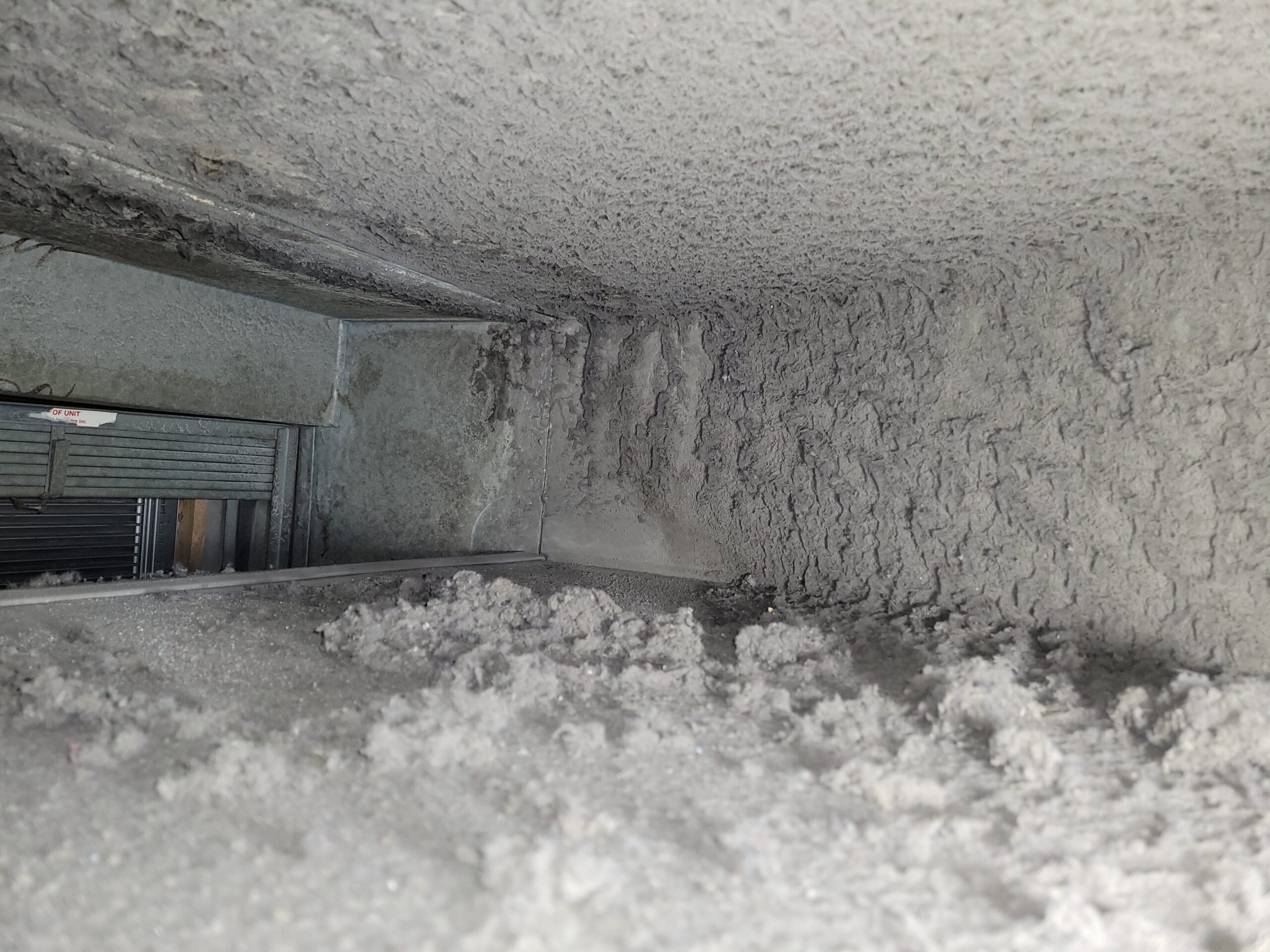
Dirt in a freezer duct is rarely loose. It is a layer cake of dust, frost, and sugar cement. You brush it and it smiles back. Warm breath fogs on contact and adds another gram of water to the story.
I have opened spiral duct above a dock where cardboard fines and forklift tire residue had created a charcoal-gray suede lining. At the diffusers, frost had captured stray fibers and grown whiskers two inches long. In a bakery freezer, atomized sugar dust had combined with condensate to form a brittle glaze. In a meat plant, protein residue near an air sock fed a faint biofilm that went invisible once frozen. When we warmed that section for cleaning, the smell hinted at what the lab later confirmed.
In offices and labs along the perimeter, you get the same buildup you would expect anywhere people live and breathe, just with more condensation around thermal bridges. Return ducts near doors to the dock collect the dust and the occasional featherweight packaging scrap that escapes from pallet wrap.
The most deceptive dirt hides at transitions, volume dampers, and turning vanes. Every time air changes direction, particulates tap the brakes and drop out. On the outside, insulation with a compromised vapor barrier becomes a moist sweater. If you see staining or blistering in the jacket, assume moisture inside and a corrosion story about to find a narrator.
Methods that actually work when everything is cold
Big picture, commercial duct cleaning is about dislodging, capturing, and verifying. The cold complicates each part.
Mechanical agitation still does the heavy lifting. Rotary brush systems sized for large diameter duct, with flexible shafts that can turn through 90s, remain the most effective way to break stubborn buildup. Air whips are great in warm systems, but in cold ducts they can atomize frost into a snow globe that takes hours to settle. If we use whips in a freezer, we run very conservative air and pair with high-capacity HEPA negative air machines at close capture points.
Vacuum capture must be HEPA, and the machines need to be sized to maintain 2,000 to 5,000 CFM of pull at the section being agitated, depending on duct size. In large trunks we often set two machines in parallel. Long flex hose kills airflow, so we cut and install temporary access closer to the work. Access holes get finished with gasketed panels after.
Dry ice blasting has a home in cold storage, but not everywhere. On heavy glaze inside stainless drops or on unit cooler frames, it is a star. Inside galvanized duct, use care. You can shock-coat brittle and blow through weak seams, and you create a very cold CO2 fog that must be exhausted. Pair with gas monitoring and a plan to vent. I would not use it on insulation facings, ever.
Chemistry becomes a game of temperatures and contact times. Food-safe peroxide and quaternary ammonium solutions have labels that assume room temperature. At 35 degrees F, contact time often needs to double. At 0 degrees F, you do not have contact time. You have ice. The right move is to warm the section to at least the low 40s. That takes coordination with refrigeration techs, portable electric or indirect fired heaters, and vapor barriers to keep condensation from raining on product.
We rely on dry steam in process rooms for final sanitization on stainless surfaces because it penetrates biofilm and leaves little moisture behind. In ducts, steam can condense and pool. Use it only where you can see and collect condensate, and only after mechanical and vacuum steps.
Dehumidifiers become your cleanup crew. If you have a desiccant unit in the dock system, put it to work during and after cleaning. It will help you pull the space back to spec dew point faster, stop residual condensation, and make ATP and swab verification less chaotic.
Planning the job without turning the dock into a cloud
Cold storage projects reward people who think at least three moves ahead. Crews with warm hands and cold heads make fewer mistakes. Here is the short checklist I hand to any project manager before they touch a duct over frozen french fries.
- Define zones with operations so only one temperature-critical area goes down at a time, and map product flows around it. Book refrigeration techs for setpoint changes, defrost schedules, and lockout coordination on unit coolers or air handlers tied to your work. Stage heaters, containment, and dehumidification, and verify you have a path to exhaust fine particulates and any CO2 if dry ice blasting is on the menu. Pre-install access doors on a prep day, seal vapor barriers, and let adhesives cure at the right temperature before the main event. Lock in verification methods with QA in advance, including ATP, photos, and pressure readings, so sign-off does not drift.
Do those five, and you have already solved half the problems that derail timelines.
Access, the art nobody brags about
Most delays happen because someone thought they could reach 60 feet down a 36 inch duct through a single end cap. Not in this lifetime. Good access is a craft, and in cold environments it is a weatherproofing exercise too.
We cut openings Advanced Environmental Service sized for the tools, not the smallest hole your courage allows. On spiral duct that often means 12 by 20 inch or larger panels every 20 to 30 feet and on both sides of a turning elbow. On rectangular trunks, panels adjacent to dampers and at branch taps. Every cut face gets deburred and painted to prevent corrosion.
The access door choice matters. In process areas, stainless and gasketed is the default. In docks, double wall panels with a thermal break keep condensation at bay. Every door must preserve the vapor barrier. If the jacket is PVC or foil, we bridge with a scrim tape approved for cold application and then a facing patch that matches the system. Sloppy patches sweat forever. That moisture gets into insulation, and your R-value slumps like wet cotton candy.
Do not forget structure. Some duct runs hang from old threaded rod and unistrut that took a forklift kiss in 2009 and never recovered. Before you lean a technician and a tool kit against it, verify hanger load paths. I have added temporary cribbing under duct runs just to keep a brush rig from torquing a weak seam.
Verification that satisfies QA and the energy nerds
A clean duct that nobody documented is a ghost story. You need proof that speaks both to food safety and to performance.
Photos and video inside key sections, with date stamps and identifiable landmarks, are the simplest evidence. We shoot from the same vantage points before and after, and we include a scale reference, like a marked probe, so you can see frost thickness change.
ATP testing can help in process rooms, but remember that cold and dry conditions affect readings. Agree on a protocol. Often we warm the surface to a target temperature, apply sanitizer per label, then swab after the proper contact time and dryness. Culture-based tests tell a better story in high risk rooms, but they take time.
For performance, we measure static pressure in the same locations before and after, across coils and filters and at upstream and downstream of major trunks. A drop of 0.2 to 0.5 inches across a cleaned trunk is common when it was visibly dirty. Airflow verification with a pitot traverse in straight runs, or hood readings at diffusers, closes the loop. Tie those gains to VFD trends and you have the energy line in your ROI.
Documentation packages should align with ACR, The NADCA Standard, adapted to cold environments. I also include a sanitation SOP appendix that speaks the language of the facility’s HACCP plan, so auditors see continuity.
Costs, frequency, and the math that convinces the plant manager
No two facilities match, but some ranges hold. Cleaning a dock supply system with 200 to 400 feet of large diameter duct, plus several office AHUs tied to the warehouse envelope, commonly runs in the mid five figures. If access is poor and after-hours work is mandatory to keep product moving, you add 20 to 40 percent.

Unit cooler coil and drain pan sanitation in freezers usually comes as a separate line. Expect hundreds to low thousands per unit depending on size, height, and soil load. Bundling coil cleaning with duct cleaning makes sense because your dehumidification and warmup plan covers both.
Frequency depends on what you move. Frozen vegetables and boxed dry goods create less airborne soil than bakery or confectionery operations where sugar and flour ride every air current. Docks that handle mixed freight will trend dirty faster than those attached to a single-commodity distribution center. I recommend annual cleaning on docks with high door cycles and visible frosting issues, semiannual sanitation in high care process rooms, and a two to three year cadence on office AHUs unless conditions argue otherwise. Check filters monthly and do a static pressure survey quarterly to catch drift early.
The ROI pitch is blunt. If a 15 hp fan runs 5,000 hours a year and you cut its load by 10 percent with reduced static, you save roughly 5,600 kWh. At 12 cents per kWh, that is about 670 dollars per fan per year. In a dock with six similar fans, just the energy savings subsidize a chunk of the cleaning. Fewer slip events from condensation and better auditor scores do not show on the utility bill, but they save real money.
Edge cases that bite when ignored
Fabric air socks are common over process lines for even distribution. They get dusty and can develop biofilm. Washing them is straightforward on paper, but in practice you need spares and a controlled laundry protocol. Pulling them without backups stalls production. Plan a rotation.
CO2 or ammonia refrigeration plants add safety layers. Dry ice blasting near CO2 leak points is a terrible idea. Gas monitors must be active, and your crew should know what to do if a detector screams at 3 a.m. Lockout tagout on evaporator fans and heaters is non-negotiable. Confined space rules can apply to large air handlers.
Insulated duct board does not belong in low temp or high humidity areas. Still, I find it. It sheds fibers when wet and becomes a mildew farm during warmups. Replacing sections with double wall metal during a cleaning project often pays for itself in reduced headaches.
HVLS fans in docks move a lot of air. They also move a lot of dust if you clean beneath them without shutting them down and sheeting off work areas. Turn them off, bag the motors if you are cutting access above, and coordinate with maintenance so you do not trigger a fault.
Finally, adhesives have temperature limits. Mastic that sticks like a champ at 70 degrees F falls off at 25. Use cold-rated sealants and allow adequate cure time in a tempered space, then reintroduce the cold. I have seen too many beautiful patches weep because someone hurried.
Choosing a contractor who will not make it snow inside
You want a partner who understands food plants, not just ducts. The shortlist always looks the same from my side of the table.
- NADCA certified supervisors and techs, plus documented food safety training that aligns with your plant’s GMPs and visitor rules. A plan for temperature management, containment, and verification, not just a price for brushing and vacuuming. Ask to see a sample SOP and a recent report package. Insurance that covers food contamination and product recall, not just general liability. Comfort with lockout tagout, elevated work platforms, and gas monitoring, with equipment that actually shows up on day one. References from cold storage or food distribution clients, and if possible, a recent project walkthrough to see their work, especially access door finishes.
If a bidder waves away the need to warm sections or to coordinate with refrigeration techs, they are guessing. Do not pay them to learn on your dock.
A freezer story, with numbers and thawed knuckles
We took on a 280,000 square foot distribution center with eight dock supply fans and a mess of vestibules that looked like rain forests on busy days. The facility kept failing its internal audits on condensation and had two near misses with slips in the same month. Their maintenance team had cleaned diffusers and swapped filters, but static pressure readings had crept up by 0.4 inches across the main trunks over two years.
We mapped the ducts and found three problem children. At diffuser runs over the busiest doors, frosting had caught cardboard lint and built stalactites in the necks. In the main trunks, elbows just upstream of the diffusers held a felt lining half an inch thick. Insulation facing was blistered along twenty feet where a vapor barrier patch had failed years earlier.
We shut down one bank at a time, erected poly containment around the worst sections, and brought the trunks up to 45 degrees F with indirect fired heaters. That took patience and a watchful eye on dew point. We installed four new access doors, used rotary brushes and dual HEPA machines for capture, and avoided air whips except in short straight runs. Dry ice blasting handled the crust in stainless drops above two doors where sugar loads were heavy from a nearby client account. We patched the insulation jacket using a cold-rated tape and facing system and documented the repair with moisture meter readings.
QA joined us for post-clean ATP in the process rooms and for visual checks in the dock. The maintenance lead took static pressure readings with us. Across the two worst trunks, we reclaimed 0.35 and 0.42 inches water column. Door-area condensation improved within a week as the dehumidifier stopped fighting for air it did not have. The plant manager noticed the simplest sign on day three. The forklift lanes were dry, and nobody had to post a yellow cone that morning.
Six months later, their internal audit passed on the first try. Energy data showed an 11 percent drop in kWh on the dock air handlers, year over year, normalized for door cycles. Not a miracle. Just physics, respected and applied.
The bigger picture, small details
Commercial duct cleaning in cold storage and distribution centers blends grit with systems thinking. You are not polishing a mirror. You are restoring design intent to an environment that punishes shortcuts. The work is half sanitation, half airflow, and the exact mix changes from a freezer with unit coolers to a dock with hungry air curtains.
If you remember that cold amplifies every mistake, you start to love the details. The right access door prevents a sweat halo. The correct sealant prevents a frozen tear five feet down the line. The decision to warm a section turns a chemistry label from fiction into fact. A measured drop in static turns into less frost on a gasket, which turns into a door that opens without a pry bar on Tuesday night.
That is the game. Keep the air honest. Keep the ducts clean. Keep the auditors calm. And every now and then, enjoy the rare pleasure of walking a dock that does not feel like a skating rink. That is when you know the plan worked, the crew did the hard parts right, and the building can breathe the way it was designed to.
Advanced Environmental Services Inc.
341 Stanley St, Winnipeg, MB R3A 1S7
+12042846390